PCI DSS Compliance, Payment Security Best Practices, Fraud Prevention Strategies, and Cybersecurity for Modern Digital Commerce
The rapid growth of digital commerce and financial technology has fundamentally changed how businesses and consumers interact. Online shopping, mobile banking, digital wallets, subscription services, Buy Now, Pay Later (BNPL) platforms, and embedded finance have become an integral part of everyday life. Customers now expect fast, seamless, and secure payment experiences across websites, mobile applications, and cloud-based services.
However, the same digital transformation that creates new business opportunities also attracts increasingly sophisticated cybercriminals. Financial data remains one of the most valuable targets on the black market, making online retailers and FinTech companies prime targets for phishing campaigns, payment fraud, credential theft, ransomware, account takeover attacks, and data breaches.
A single compromise involving customer payment information can result in severe financial losses, regulatory penalties, legal action, reputational damage, and a significant decline in customer trust. For organizations operating in the financial technology and eCommerce sectors, cybersecurity is no longer simply an IT function—it is a fundamental business requirement.
Protecting payment data requires more than deploying firewalls or installing antivirus software. Organizations must adopt a layered security strategy that includes secure software development, strong authentication, encryption, fraud detection, continuous monitoring, and compliance with internationally recognized security standards such as the Payment Card Industry Data Security Standard (PCI DSS).
This article explains how FinTech companies and online merchants can safeguard customer payment information, comply with PCI DSS requirements, and defend against modern payment fraud in 2026.

Why Payment Data Is a Prime Target
Unlike many other types of personal information, payment data can often be monetized immediately.
Cybercriminals actively seek access to:
- Credit card numbers
- Debit card information
- Card Verification Values (CVV)
- Payment tokens
- Online banking credentials
- Digital wallet accounts
- Customer billing details
Stolen payment information may be used for fraudulent purchases, identity theft, account takeovers, or sold on underground marketplaces.
Understanding the Modern Payment Threat Landscape
Financial cybercrime continues to evolve rapidly.
The most common threats include:
- Payment card fraud
- Credential stuffing
- Account takeover attacks
- Phishing campaigns
- Business Email Compromise (BEC)
- Malware
- API attacks
- Supply chain compromises
- Ransomware
- Social engineering
Attackers increasingly combine multiple techniques within a single campaign.
What Is PCI DSS?
The Payment Card Industry Data Security Standard (PCI DSS) is a globally recognized security framework designed to protect payment card information.
The standard applies to organizations that:
- Store cardholder data
- Process payments
- Transmit payment information
- Manage payment infrastructure
Compliance helps reduce the likelihood of payment card breaches while establishing consistent security practices.
Core Objectives of PCI DSS
Although the standard contains numerous technical requirements, its primary goals include:
- Building secure networks
- Protecting stored cardholder data
- Encrypting transmitted payment information
- Managing vulnerabilities
- Implementing strong access controls
- Monitoring systems continuously
- Maintaining comprehensive security policies
Compliance should be viewed as an ongoing process rather than a one-time certification.
Never Store Sensitive Payment Data Unnecessarily
One of the simplest ways to reduce cybersecurity risk is to minimize the amount of payment information retained.
Organizations should avoid storing:
- Full payment card numbers
- CVV codes
- Magnetic stripe data
- PIN information
The less sensitive information stored, the smaller the potential impact of a security incident.
Encryption Protects Payment Information
Encryption converts payment information into unreadable data.
Even if attackers intercept encrypted information, they cannot easily interpret it without the corresponding cryptographic keys.
Payment information should be encrypted:
- During transmission
- While stored
- During backups
- Between internal services
Strong encryption remains one of the most effective security controls.
Tokenization Reduces Payment Risk
Many payment providers use tokenization instead of storing actual card numbers.
Tokenization replaces sensitive payment information with randomly generated identifiers.
Benefits include:
- Reduced exposure of cardholder data
- Lower compliance complexity
- Improved fraud resistance
- Smaller attack surface
If attackers steal payment tokens, the information has little practical value without the protected payment environment.
Implement Strong Authentication
Customer accounts should be protected through multiple security layers.
Recommended controls include:
- Multi-Factor Authentication (MFA)
- Strong password policies
- Passwordless authentication where appropriate
- Device verification
- Adaptive risk-based authentication
Additional verification significantly reduces account takeover attempts.
Protect Against Account Takeover (ATO)
Account takeover remains one of the fastest-growing financial cyber threats.
Attackers often obtain credentials through:
- Phishing
- Password reuse
- Credential stuffing
- Malware
- Social engineering
Organizations should monitor for:
- Unusual login locations
- Impossible travel events
- Device changes
- Repeated failed login attempts
- Suspicious purchasing behavior
Behavioral analytics improve detection accuracy.
Secure Payment APIs
Modern FinTech platforms rely heavily on APIs for payment processing and third-party integrations.
API security should include:
- Authentication
- Authorization
- Rate limiting
- Input validation
- Encryption
- Continuous monitoring
Poorly secured APIs frequently become attractive attack vectors.
Fraud Detection Systems
Modern payment fraud often occurs in real time.
Organizations increasingly deploy intelligent fraud detection systems capable of analyzing:
- Transaction amounts
- Customer behavior
- Device fingerprints
- Geographic patterns
- Purchase frequency
- Historical transaction history
High-risk transactions may trigger additional verification before approval.
Artificial Intelligence in Fraud Prevention
AI has become a powerful tool for payment security.
Machine learning systems can detect:
- Anomalous transactions
- Bot activity
- Card testing attacks
- Suspicious purchasing patterns
- Automated fraud campaigns
AI enables organizations to identify threats much faster than traditional rule-based systems.
Secure Software Development
Security should be integrated throughout the software development lifecycle.
Development teams should implement:
- Secure coding practices
- Code reviews
- Vulnerability scanning
- Penetration testing
- Dependency management
- Security testing before deployment
Early detection of vulnerabilities significantly reduces long-term risk.
Continuous Monitoring
Payment environments require constant visibility.
Organizations should monitor:
- Authentication activity
- Administrative actions
- Network traffic
- Database access
- Payment processing systems
- API requests
- Security alerts
Continuous monitoring enables rapid incident detection and response.
Protect Cloud-Based Payment Infrastructure
Many FinTech platforms operate entirely in cloud environments.
Cloud security should include:
- Identity and Access Management (IAM)
- Encryption
- Network segmentation
- Secure configuration management
- Continuous compliance monitoring
- Automated security assessments
Cloud environments require the same level of protection as traditional infrastructure.
Employee Awareness
Technology alone cannot prevent payment fraud.
Employees should receive regular training covering:
- Phishing recognition
- Social engineering
- Secure handling of customer information
- Incident reporting
- Password security
- Remote work practices
Well-informed employees become an important layer of organizational defense.
Incident Response Planning
Organizations should prepare for payment-related security incidents before they occur.
Response plans should define:
- Incident reporting procedures
- Customer communication
- Regulatory notification
- Forensic investigation
- Service restoration
- Public relations strategy
Preparation minimizes confusion during high-pressure situations.
Common Payment Security Mistakes
Many payment-related breaches result from avoidable weaknesses.
Examples include:
- Weak authentication
- Missing Multi-Factor Authentication
- Outdated software
- Poor API security
- Excessive user privileges
- Lack of encryption
- Misconfigured cloud services
- Inadequate employee training
Correcting these issues significantly improves payment security.
Emerging Threats in 2026
The payment ecosystem continues evolving rapidly.
Key trends include:
- AI-powered fraud campaigns
- Deepfake identity verification attacks
- Synthetic identity fraud
- Automated credential stuffing
- Supply chain attacks
- Mobile payment malware
- API-focused attacks
- Increased attacks targeting digital wallets
Organizations must continuously adapt their security strategies to address these emerging risks.
Best Practices for FinTech and eCommerce Security
Businesses seeking enterprise-grade payment protection should:
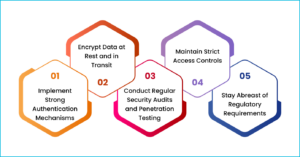
- Achieve and maintain PCI DSS compliance.
- Encrypt payment information both in transit and at rest.
- Use tokenization whenever possible.
- Implement Multi-Factor Authentication.
- Monitor transactions continuously.
- Deploy AI-assisted fraud detection.
- Conduct regular penetration testing.
- Secure APIs and cloud infrastructure.
- Train employees regularly.
- Develop and rehearse incident response procedures.
Security should be viewed as a continuous process rather than a one-time implementation.
The Business Value of Strong Payment Security
Investing in payment security delivers benefits beyond regulatory compliance.
Organizations with mature security programs often experience:
- Greater customer trust
- Lower fraud losses
- Faster incident response
- Improved operational resilience
- Better regulatory compliance
- Reduced financial risk
- Stronger brand reputation
Cybersecurity becomes a competitive advantage rather than merely a cost center.
Conclusion
As digital payments continue to expand across eCommerce platforms and FinTech services, protecting customer payment information has become one of the most important responsibilities for modern businesses. Cybercriminals increasingly target payment systems using sophisticated techniques such as account takeover, API exploitation, phishing, ransomware, and AI-assisted fraud campaigns, making traditional security measures insufficient on their own.
Organizations that combine PCI DSS compliance with strong encryption, tokenization, Multi-Factor Authentication, secure software development, continuous monitoring, intelligent fraud detection, and comprehensive employee awareness programs are significantly better equipped to defend against evolving financial threats. In 2026, payment security is no longer just about meeting regulatory requirements—it is a strategic investment that protects customer trust, strengthens business resilience, supports long-term growth, and enables organizations to compete confidently in the rapidly evolving digital economy.