
How Cybercriminals Exploit Smart Sensors, Surveillance Cameras, Connected Equipment, and Third-Party Integrations—and How Businesses Can Close These Security Gaps
The logistics and manufacturing industries are undergoing one of the largest technological transformations in history. Smart factories, automated warehouses, Industrial Internet of Things (IIoT) devices, robotics, connected production lines, AI-powered quality control, GPS fleet management, cloud-based Enterprise Resource Planning (ERP) systems, and real-time supply chain monitoring have dramatically improved efficiency, productivity, and operational visibility.
However, every connected device also represents a potential entry point for cybercriminals.
Unlike traditional office networks, modern industrial environments contain thousands of Internet-connected sensors, programmable logic controllers (PLCs), surveillance cameras, barcode scanners, environmental sensors, automated guided vehicles (AGVs), RFID readers, industrial robots, and cloud-connected management systems. Many of these devices were designed primarily for operational reliability rather than cybersecurity.
At the same time, manufacturers and logistics providers increasingly depend on external suppliers, cloud platforms, transportation partners, managed service providers, and software vendors. While these integrations enable efficient business operations, they also create complex supply chain relationships that attackers can exploit to gain indirect access to corporate networks.
Recent cyber incidents have demonstrated that attackers no longer need to breach a company’s primary firewall directly. Instead, they frequently compromise vulnerable IoT devices, poorly secured industrial control systems, or trusted third-party partners before moving deeper into business-critical environments.
This article explores the cybersecurity challenges facing logistics and manufacturing organizations in 2026, explains how attackers exploit connected devices and supply chain relationships, and provides practical strategies for protecting Industrial IoT (IIoT) infrastructure and strengthening cyber resilience.
The Rise of Industrial IoT
Industrial Internet of Things technology has become a cornerstone of modern manufacturing and logistics.
Organizations now deploy connected devices to monitor:
- Production equipment
- Warehouse inventory
- Fleet locations
- Temperature and humidity
- Energy consumption
- Machine performance
- Predictive maintenance
- Environmental conditions
Real-time data improves operational efficiency but also increases the attack surface.

Why Logistics and Manufacturing Are Attractive Targets
Cybercriminals recognize that operational downtime directly affects revenue.
Successful attacks may interrupt:
- Manufacturing lines
- Warehouse automation
- Shipping operations
- Inventory management
- Customer deliveries
- Procurement
- Quality assurance
- Financial systems
Because every hour of downtime can result in significant financial losses, organizations may face increased pressure to pay ransomware demands.
Understanding the Modern Attack Surface
Unlike traditional office environments, industrial organizations operate highly interconnected ecosystems.
Potential attack vectors include:
- Smart sensors
- Surveillance cameras
- Industrial controllers
- Wireless networks
- Mobile devices
- Remote maintenance systems
- Cloud management platforms
- Vendor integrations
- Connected vehicles
- Third-party software
Each connection creates a potential pathway for attackers.
How Attackers Exploit IoT Devices
Many Internet of Things devices prioritize convenience over security.
Common weaknesses include:
- Default passwords
- Outdated firmware
- Unpatched vulnerabilities
- Weak authentication
- Insecure communication protocols
- Poor encryption
- Open management interfaces
Attackers actively scan the internet for vulnerable connected devices.
Smart Cameras as Entry Points
Network-connected surveillance cameras often remain online for years without security updates.
Compromised cameras may allow attackers to:
- Observe facility operations
- Capture employee activity
- Discover network architecture
- Launch lateral movement attacks
- Install persistent malware
Video surveillance systems should be treated as critical network assets rather than simple security equipment.
Industrial Sensors
Manufacturing facilities rely on thousands of connected sensors.
These devices monitor:
- Pressure
- Temperature
- Vibration
- Machine status
- Inventory levels
- Energy usage
Compromising sensor data may disrupt automated production processes or cause inaccurate operational decisions.

Programmable Logic Controllers (PLCs)
PLCs control many industrial processes.
Attackers targeting PLCs may attempt to:
- Stop production
- Modify manufacturing parameters
- Damage equipment
- Reduce product quality
- Create unsafe operating conditions
Industrial control systems require specialized security protections.
Supply Chain Attacks
Modern businesses rarely operate independently.
Organizations exchange information continuously with:
- Suppliers
- Transportation companies
- Software vendors
- Cloud providers
- Maintenance contractors
- Manufacturing partners
If attackers compromise one trusted partner, they may obtain indirect access to multiple connected organizations.
Third-Party Integrations
APIs and automated data exchange improve operational efficiency.
However, poorly secured integrations may expose:
- Inventory systems
- Order management
- Customer information
- Financial records
- Production schedules
Third-party access should always follow the Principle of Least Privilege.
Ransomware in Manufacturing
Manufacturing has become one of the primary targets for ransomware groups.
Attackers often seek to:
- Encrypt production systems
- Disable warehouse operations
- Steal intellectual property
- Interrupt shipping
- Demand multimillion-dollar ransom payments
Operational disruption frequently causes greater financial damage than the ransom itself.
Zero Trust for Industrial Networks
Traditional network security assumes trusted internal environments.
Modern industrial environments require Zero Trust principles.
Organizations should continuously verify:
- User identities
- Device health
- Application behavior
- Network activity
Trust should never be granted solely because a device resides inside the corporate network.
Network Segmentation
Segmentation prevents attackers from moving freely between systems.
Industrial environments should separate:
- Office networks
- Production systems
- IoT devices
- Administrative systems
- Backup infrastructure
- Guest networks
Compromising one segment should not expose the entire enterprise.
Secure Device Authentication
Every connected device should possess a verified identity.
Organizations should eliminate:
- Shared passwords
- Default credentials
- Anonymous device communication
Strong authentication reduces unauthorized access.
Firmware Management
Outdated firmware frequently contains publicly known vulnerabilities.
Organizations should establish structured processes for:
- Firmware inventory
- Update testing
- Security patching
- Vulnerability assessment
Keeping devices current significantly reduces cyber risk.
Monitoring Industrial Networks
Continuous visibility is essential.
Security teams should monitor:
- Device communication
- Unexpected traffic
- Configuration changes
- Authentication failures
- Data transfers
- New device connections
Behavioral monitoring helps identify compromised equipment early.
Securing Remote Maintenance
Equipment vendors often require remote access for diagnostics and maintenance.
Organizations should implement:
- Multi-Factor Authentication (MFA)
- Temporary access approval
- Session recording
- Access logging
- Network isolation
Remote connections should never remain permanently available.
Cloud Security for Smart Manufacturing
Cloud platforms increasingly support:
- Equipment monitoring
- Predictive maintenance
- Supply chain analytics
- Inventory management
- Artificial intelligence
Cloud environments require:
- Encryption
- Identity management
- Secure APIs
- Continuous monitoring
- Configuration management
Misconfigured cloud resources remain a common source of data exposure.
Employee Awareness
Operational technology environments depend on both technical and non-technical staff.
Training should include:
- Phishing awareness
- Device security
- Password management
- Incident reporting
- Safe USB usage
- Social engineering prevention
Employees often detect unusual operational behavior before automated systems.
Vendor Risk Management
Every supplier should undergo cybersecurity evaluation.
Organizations should assess:
- Security certifications
- Incident response capabilities
- Access management
- Software update practices
- Compliance standards
Cybersecurity should become part of supplier selection criteria.
Incident Response for Operational Technology
Industrial incident response differs from traditional IT recovery.
Organizations should prepare procedures covering:
- Production shutdown
- Equipment isolation
- Safety coordination
- Backup restoration
- Vendor communication
- Regulatory reporting
Well-rehearsed response plans reduce operational disruption.
Artificial Intelligence in Industrial Security
AI increasingly supports industrial cybersecurity through:
- Behavioral analytics
- Predictive threat detection
- Network anomaly identification
- Automated incident response
- Device risk scoring
AI improves visibility across large industrial environments containing thousands of connected devices.
Future Threat Trends
Several trends are expected to shape industrial cybersecurity beyond 2026.
These include:
- AI-assisted cyberattacks
- Increased supply chain compromises
- More attacks targeting IoT firmware
- Automated exploitation of industrial devices
- Cloud-native industrial malware
- Expansion of ransomware targeting operational technology
Organizations must continuously adapt their security programs to address evolving threats.
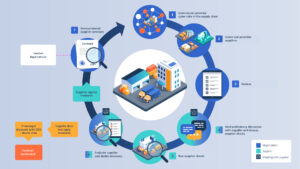
Best Practices for Protecting Logistics and Manufacturing Operations
Organizations should prioritize the following cybersecurity measures:
- Implement Zero Trust architecture across both IT and OT environments.
- Segment production networks from business systems.
- Replace default credentials on all IoT devices.
- Keep firmware and software up to date.
- Secure third-party integrations using least-privilege access.
- Monitor industrial networks continuously.
- Protect remote maintenance with Multi-Factor Authentication.
- Maintain immutable offline backups.
- Conduct regular penetration testing and vulnerability assessments.
- Provide ongoing cybersecurity awareness training for employees and contractors.
Combining these controls significantly strengthens operational resilience.
Conclusion
As logistics and manufacturing organizations continue embracing Industrial IoT, cloud computing, automation, and highly connected supply chains, cybersecurity has become a mission-critical business function rather than simply an IT responsibility. Smart sensors, surveillance cameras, programmable controllers, remote maintenance systems, and third-party integrations provide significant operational benefits, but they also create new opportunities for cybercriminals to infiltrate business environments and disrupt operations.
Protecting modern industrial ecosystems requires a comprehensive security strategy built on Zero Trust principles, network segmentation, secure device authentication, continuous monitoring, firmware management, vendor risk assessment, and robust incident response planning. Organizations that proactively secure both their connected devices and their supply chain relationships will be far better positioned to defend against evolving cyber threats, maintain operational continuity, safeguard intellectual property, and build long-term resilience in an increasingly interconnected industrial landscape.